You bought the travel insurance. You read the summary document — or at least skimmed it. You ticked the box that said you understood the terms and conditions. And somewhere between the departure gate and the destination, you allowed yourself to feel reassured.
That reassurance, in our experience, is one of the more dangerous things you can carry into a hostile, remote, or complex environment.
At Forte Travel Management, we work with clients who operate in places where things go wrong in ways that standard travel insurance was never designed to contemplate. Over the years we have watched organisations and individuals discover — at the worst possible moment — that the policy they were relying on contained clauses, exclusions, and definitions that rendered it useless precisely when it was needed most. This post is an attempt to give you the unvarnished picture before you end up in that position.

The War and Terrorism Exclusion
This is the one that catches people most often, and it is worth understanding in some detail.
The vast majority of standard travel insurance policies — including many marketed as “comprehensive” or even “adventure travel” cover — exclude losses arising from war, invasion, acts of foreign enemies, hostilities, civil war, rebellion, revolution, insurrection, and military or usurped power. The precise language varies between insurers, but the intent is consistent: if you are travelling somewhere that is actively contested, your policy almost certainly does not cover you for the consequences of that conflict.
What constitutes a “war zone” for the purposes of an insurance policy is not the same as what constitutes a war zone in the popular imagination. You do not need to be in Ukraine or Gaza for a terrorism or civil unrest exclusion to be triggered. An insurer can argue — and frequently does — that a kidnapping in the Sahel, an armed robbery in a fragile state, or an injury sustained during civil disturbances falls outside the scope of cover. The FCDO travel advisory for the country in question will often be cited. If you travelled to a destination with an existing “advise against all travel” or “advise against all but essential travel” advisory, some insurers will use this to void the entire policy, not merely the conflict-related element.
The practical implication is this: if your work or travel takes you anywhere with any level of active insecurity, you need specialist cover. Standard policies are not the answer.
Medical Evacuation: What It Actually Means
Medical evacuation cover is one of the most commonly misunderstood elements of any travel insurance product. People assume that if they are seriously injured or ill in a remote location, their insurer will arrange and fund whatever is necessary to get them to appropriate medical care.
In reality, the picture is considerably more complicated.
Most policies provide medical evacuation cover to the nearest appropriate medical facility. That is a crucial distinction. The nearest appropriate medical facility in sub-Saharan Africa, Central Asia, or a remote Pacific island may not be the facility you would choose, may not meet the clinical standard you require, and may not be the facility your family believes you are being taken to. The insurer’s definition of “appropriate” and yours may diverge significantly.
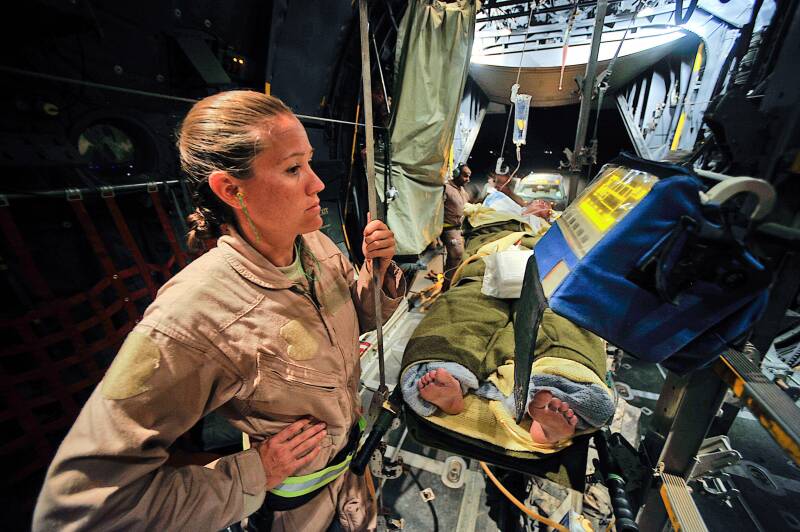
Furthermore, many policies limit medical evacuation cover geographically. Some exclude evacuation from countries under FCDO advisory. Some require the insurer’s assistance team to pre-authorise the evacuation before it happens — which, in a fast-moving emergency, is a process that can introduce fatal delays. And some policies cover the evacuation itself but not the repatriation flight home once you are stable, which is an entirely separate cost.
If you are deploying staff into remote or high-risk environments, you need to read the medical evacuation section of your policy with exceptional care. Ideally, you need a specialist broker who can explain — in plain language — exactly what will happen if the worst occurs.
The Kidnap and Ransom Gap
Standard travel insurance does not cover kidnap and ransom. It does not cover the cost of specialist negotiators, crisis consultants, or the ransom itself. It does not cover the income lost during a period of captivity, and it does not cover the psychological support required in the aftermath. This is true even of policies that include a “personal accident” benefit.
Kidnap, ransom and extortion (KRE) insurance exists precisely to fill this gap, and it is a product that is simply not on the radar of most individuals and smaller organisations operating in complex environments. It is often assumed to be the preserve of large multinationals with corporate security departments. In practice, it is available to a much wider range of operators — NGO staff, journalists, independent contractors, development workers — and it is considerably more affordable than most people expect.
The existence of a KRE policy must be kept confidential. Disclosure significantly undermines the policy’s effectiveness and can affect negotiating dynamics. This is not a policy you mention to colleagues, local contacts, or anyone outside the immediate operational leadership.
What Happens When You Are Detained

This is an area that standard travel insurance almost universally ignores. If you are detained at a border, held by police, arrested on charges that may be politically motivated, or placed under administrative detention by local authorities, your travel insurance will not pay for legal representation. It will not fund a lawyer to attend the detention facility. It will not cover the costs of engaging a local fixer to navigate the bureaucratic process of securing your release. It will not reimburse the consular fees, translation costs, or the other incidental expenses that accumulate quickly in these situations.
There are specialist legal protection products that address some of these scenarios, and there are assistance companies — distinct from insurers — that provide ground-level support in detention situations. Knowing which organisations offer these services, and having the contact details accessible before you travel, is the kind of preparation that rarely happens and frequently matters.
The Equipment and Kit Problem
If you are travelling with specialist equipment — medical kit, communications equipment, filming gear, vehicles, or technical instruments — you will almost certainly find that your travel insurance provides inadequate cover. Limits are typically low, replacement cost is rarely covered (policies usually pay market value, not replacement value), and items used for professional or commercial purposes are routinely excluded from personal travel insurance policies entirely.
Specialist equipment insurance, often arranged through a broker with experience in the relevant sector, is the appropriate solution. For vehicles, particularly in contexts involving overland travel through multiple jurisdictions, the position is even more complex — you will need to consider local compulsory insurance requirements, carnet arrangements, and the implications of driving in countries where your standard motor policy has no territorial scope.
So What Should You Actually Do?
The first step is to stop treating travel insurance as a single product and start thinking about it as a framework that may need to be assembled from multiple specialist components. For most people travelling in genuinely complex environments, the right answer involves some combination of: specialist war and terrorism cover, bespoke medical evacuation and repatriation arrangements, kidnap and ransom insurance (if the destination warrants it), separate equipment cover, and a legal protection product.
This sounds complicated, and it is — which is why the specialist broker market exists. There are a small number of underwriters and brokers who work exclusively in the high-risk travel and security space, and engaging one before you travel is not an extravagance; it is due diligence.
The second step is to have an operational plan that does not rely on insurance as its primary safety net. Insurance is, by definition, a response to something that has already gone wrong. It does not prevent incidents; it does not provide real-time support on the ground; and it does not make decisions under pressure. A well-constructed risk management framework — covering pre-deployment assessment, communications protocols, medical pre-positioning, in-country contacts, and a clear escalation plan — is what keeps people safe. Insurance is what deals with the financial consequences of the times when the framework is not enough.
The third step is to read the policy. Not the summary. The policy. Every exclusion clause. Every definition. Every condition precedent to cover. If you cannot do this yourself, have someone do it for you. The time to discover that your cover does not apply is not when you are trying to make a claim from a field hospital.
At Forte Travel Management, we work alongside clients at every stage of this process — from pre-deployment risk assessment and insurance framework review through to on-the-ground support when situations deteriorate. If you are planning operations or travel in any environment that presents real risk, we would encourage you to get in touch before you go, rather than after something goes wrong.
Add comment
Comments